
The Experiment Mindset: How to Move Forward Without Marrying Every Idea
Jul 09, 2026
Many aspiring entrepreneurs have a collection of business ideas somewhere.
Perhaps it is a notebook filled with possibilities. Maybe it is a document on their computer or a growing collection of bookmarked articles they keep meaning to come back to. In some cases, it is all three.
One idea seems promising for a while. Then you have another. Then yet another.
Each new possibility creates a burst of excitement, followed by a familiar set of questions:
What if there is a better idea?
What if this one doesn't work?
What if months of effort lead nowhere?
Eventually, the research grows, the thinking grows, and the movement slows.
You reach the point of having to sort through the serious details.
On the surface, it can seem like you’re just indecisive and can’t make up your mind.
But that usually is not what’s really happening.
The real problem is often that the idea no longer felt like just an experiment and started feeling like a commitment.
The Moment Many Entrepreneurs Accidentally Raise the Stakes
An idea begins as a possibility worth exploring. You learn more about the market, think through potential customers, and start imagining how the opportunity might fit into your life. At that stage, everything feels fairly manageable.
Then the mind shifts.
Suddenly, you have a detailed vision of your business in your head and begin asking whether it’s really something you want to spend years building. Your questions range from light to loaded.
The emotional experience changes, rather quickly.
A simple business idea is now connected to your judgment, your future, and your ability to make good decisions. The fear is no longer just about whether the idea will work. It becomes tangled up with what the outcome might seem to say about you.
That is one reason decision-making can feel surprisingly exhausting for a new entrepreneur.
Why the Search for the Perfect Idea Usually Creates More Delay

Many people assume they are hesitating because they aren’t seeing things clearly yet.
They believe they simply haven’t figured out the right approach yet. They figure if they could only discover the perfect opportunity, that the uncertainty would clear away and the path forward would become obvious.
But clarity tends to work differently than that.
Most of the clarity entrepreneurs rely on is created through active experimentation rather than passive analysis. Important questions are often impossible to answer without firsthand experience, no matter how much research you do.
Will customers respond the way you expect? Will you enjoy delivering the service once real people are involved? Will the opportunity become more interesting or less interesting once the initial excitement wears off?
You will rarely get those answers through just thinking.
Yet many aspiring entrepreneurs continue with only the “thinking” route. This often adds to the questions and reduces confidence.
It is a similar pattern to what I discussed in a previous blog, You Don't Need More Discipline—You Need a Personal Operating System. Progress often comes less from trying harder and more from creating conditions that make action easier.
Small experiments create those conditions by generating real-world feedback that thinking alone cannot provide.
What Successful Entrepreneurs Often Understand
There is a common assumption that experienced entrepreneurs are more confident because they know the right answers.
In many cases, they aren’t more confident because of the answers they come up with, but because of the questions they ask. Rather than wanting to be certain, they focus on gathering relevant information.
Instead of asking:
"What if this is the wrong idea?"
They often ask:
"What is the fastest way to learn whether this idea has potential?"
That distinction matters.
One question seeks certainty before going ahead with the idea. The other seeks information through action.
Consider a hypothetical example.
Imagine someone who wants to start a business helping parents support children with learning challenges. They spend months researching websites, marketing strategies, service models, and pricing structures.
But instead of building an entire business, they could begin with a simple experiment.
They might offer a small workshop to ten parents, gather feedback, and learn what questions parents are actually asking. In a matter of weeks, they would know more than they would if they had theorized for months.
Experiments create information through evidence.
And this kind of information is often the fastest path to clarity and focus for a new entrepreneur.
The Hidden Benefit of Thinking Like an Experimenter
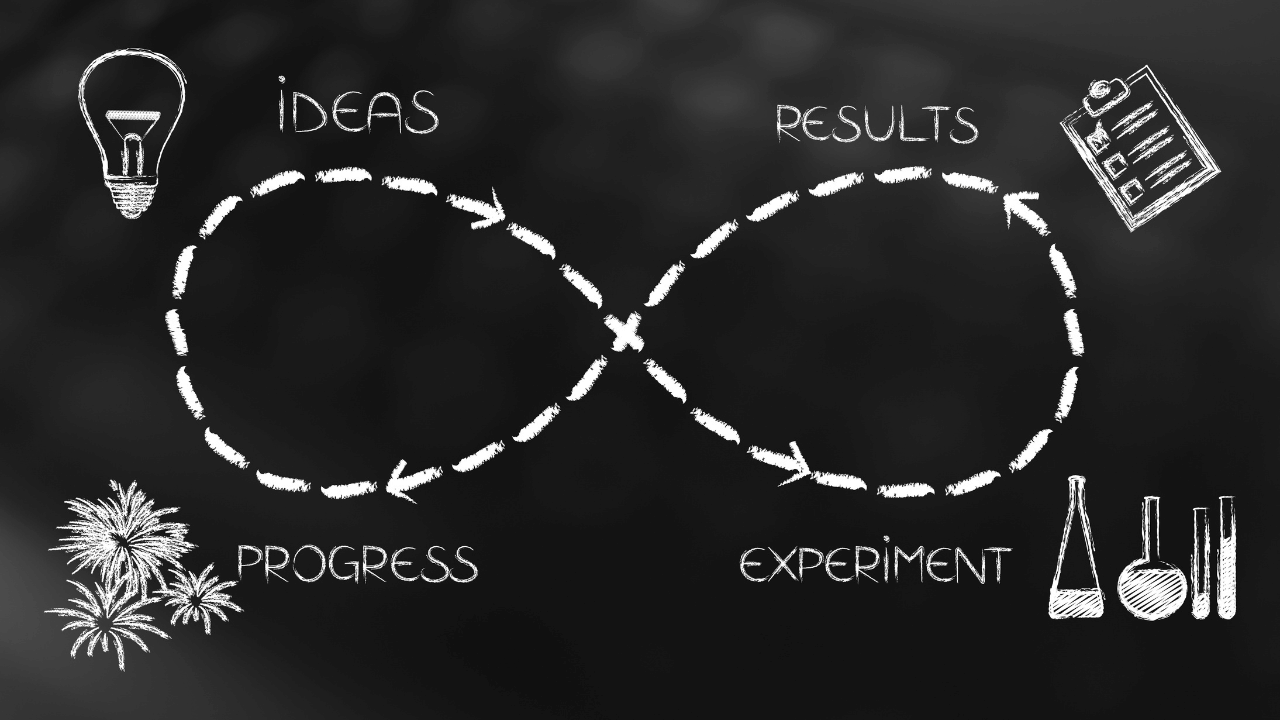
Most people assume the whole purpose of an experiment is to simply test ideas.
They certainly do that. But there’s something else experiments achieve that receives far less attention.
Experiments help protect self-trust.
When people become emotionally attached to an idea, every outcome feels personal. Low interest feels like rejection. Slow progress feels like failure. A disappointing result feels like evidence that they are bad at making decisions.
An experiment changes the meaning of the outcome.
The goal is no longer to prove that you are right. The goal becomes about learning something useful.
In many ways, it is similar to one of the ideas discussed in The Founder’s Permission Slip: 7 Things You’re Allowed to Do While Starting a Business. You are allowed to learn before committing. You are allowed to change your mind when you discover new information.
Coming to that realization is one of the most valuable mindset shifts for entrepreneurs. It is also one of the most effective ways of overcoming self-doubt in business.
When Being Ready Means Being Willing to Experiment
Many people believe being ready means being certain.
They assume the magical moment of being ready will be when everything makes sense and all doubts are gone. But this rarely happens in entrepreneurship.
Instead, it is more productive to be willing to experiment. To learn. To gather evidence. Hoping to feel certain is a passive activity that usually doesn’t produce results.
And the entrepreneurs who make progress are not necessarily the ones with the strongest certainty.
They are often the ones who stop treating ideas like lifelong commitments and allow them to earn their place through experimentation.
Your Turn

If you have been carrying an idea around for weeks or months, consider whether you have accidentally raised the stakes.
Has the idea become a measure of your judgment? Has it become something that feels too important to get wrong?
If so, you may simply need a smaller experiment.
Choose one idea.
Then ask yourself:
What is the smallest action I could take this week that would help me learn something useful about my idea?
Because most successful businesses do not begin with certainty.
They begin with curiosity, experimentation, and a willingness to learn from real-world feedback.
Ready Set Grow was built on exactly this principle. Our Entrepreneurial Fitness framework helps aspiring entrepreneurs develop the mindset, confidence, and business foundations that make forward progress feel less overwhelming.
If you are looking for practical guidance on how to start a business with confidence, join our newsletter below for weekly insights designed to help you build both the entrepreneur and the business.
