
When Anxiety Hits Mid-Decision: A Calm 4-Step Reset for Founders
Apr 16, 2026
Most founders expect the hard part of a decision to be the thinking phase.
Researching, running the numbers, mapping the plan, and having the conversations.
But that usually isn’t the moment that causes the pause.
The pause happens later.
This is when the browser tab stays open, the email stays a draft, and the same paragraph gets read three times without any new developments.
Other people may think you’re simply hesitating.
But it’s more complicated than that because so much has landed all at once.
You now have full responsibility for what you are building. Your sense of competence is staring at you. And your outcomes are uncertain.
And the brain just… stalls.
The Moment Many Founders Misread
There is a well-known story about Jeff Bezos before he created Amazon.
In the mid-1990s, he was working at a successful hedge fund. While studying the growth of the internet, he noticed something unusual: online usage was increasing more than 20 times a year.
The opportunity was clear, the numbers were clear, and the direction was clear.
He did the analysis and decided to move ahead.
But it still didn’t feel settled.
Bezos later explained that he had stepped away and experimented with what he called a “regret minimization framework.” He imagined himself at age eighty, looking back and asking himself which choice would leave fewer unanswered questions.
This was the framework that helped him complete the decision.
Here’s the key part:
The anxiety didn’t show up before he did the work. It showed up after.
The work and logic were done. His emotional system was lagging behind.
First-time founders run into this more than they expect.
Why Anxiety Appears After the Thinking Is Done

Most founders assume feeling anxious means something is wrong with the decision.
Let’s look closely at what usually happens.
You do your work: research competitors and review costs.
You consider your schedule and your energy.
The logic and reasoning are finished.
Then the mind begins asking a different question:
What does this say about me if it doesn’t go according to plan?
That is the identity layer.
Starting a business changes what ordinary decisions seem to say about you. Setting a price, launching something new, posting online, or reaching out to a potential partner can start to feel like a public test of your judgment as a founder.
Your brain picks up on that.
And it treats it like a real emergency.
So your thinking gets narrow. The decision that looked manageable an hour earlier now feels harder to follow through on.
But it wasn’t anything about your decision that changed.
It was your mental bandwidth that adjusted.
Once you see that, the circling tends to stop.
Your Anxiety is Not the Same as Your Intuition
Many articles suggest you should simply trust your gut.
It sounds reasonable, but it creates confusion.
Because what founders often experience is not one signal, but two. This is to be expected.
The first signal is intuition about your idea.
Your intuition shows up early. An idea makes sense before you have all the details. Something about the opportunity feels worth exploring, so you begin gathering information and testing it.
That early signal is what starts the decision process.
Then the analysis begins: researching, budgeting, planning, thinking through the risks.
And later in the process, a second feeling can appear: uneasiness, or anxiety about it.
That is the moment many founders misread.
Because the anxiety comes later, it can feel like a second round of intuition.
The mind begins asking new questions like: What if this is the wrong move? What if I overlooked something? What if this says something about my judgement?
So the original intuition gets questioned, and you are tempted to replace it with your “new intuition”.
In those moments, it is easy to assume the anxiety is a valuable warning.
But most of the time, it is simply the mind adjusting to the weight of the choice.
And what the decision process needs in that moment is not more analysis or abandoning the idea, but a short reset. The reset will allow you to return to the original intuition and carry it across the finish line.
A Calm 4-Step Reset When Your Mind Freezes
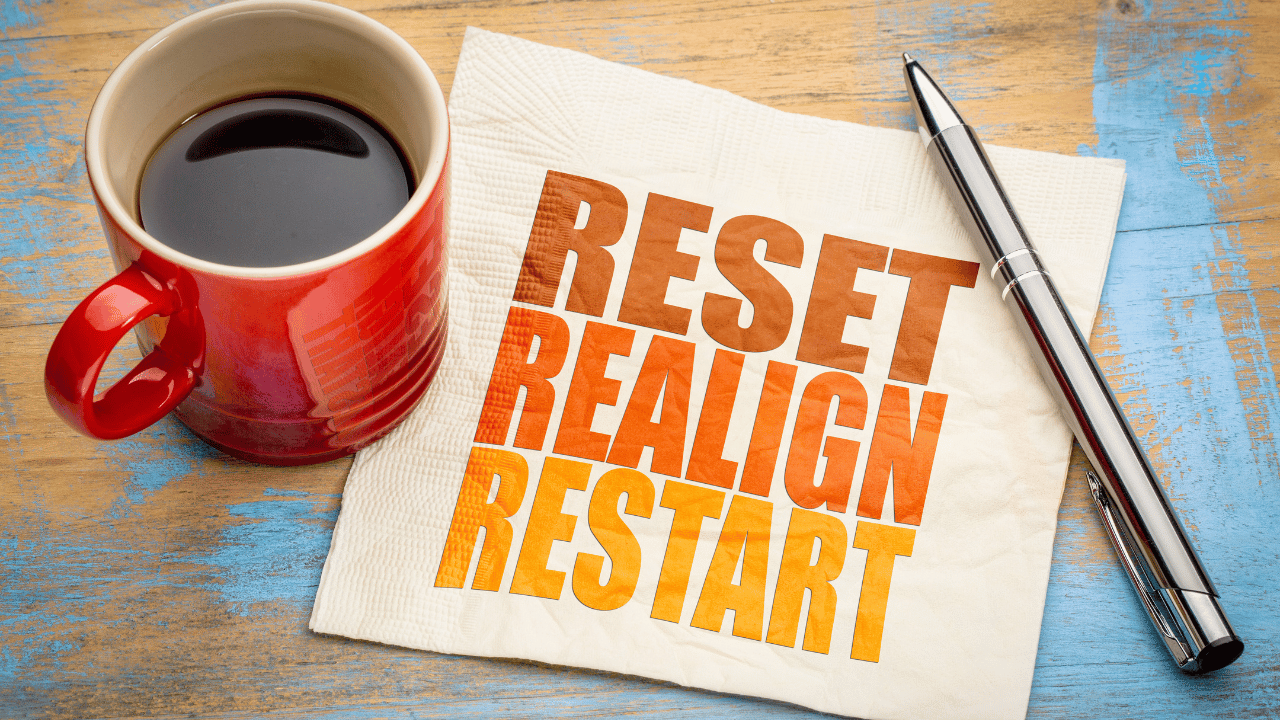
This isn’t about making the anxiety disappear.
It’s about shortening how long it derails you.
These four steps help you get back on track.
1. Name the moment accurately
Pause and describe what just happened.
You have already completed the reasoning and now the emotional system is catching up.
Naming the moment stops your brain from turning a normal pause into an endless loop of second-guessing.
Thoughts usually clear up faster once you name what actually happened.
2. Step away briefly
Five minutes is often enough.
Stand up. Walk across the room. Get a glass of water or do some light stretching. The change in environment interrupts the mental loop that keeps replaying the same question.
Small breaks interrupt the loop.
3. Revisit the analysis, not the emotion
Return to the facts you already gathered.
What criteria led to the decision? What constraints shaped the options?
Going back to the facts reminds you why the decision made sense in the first place.
4. Finish the decision in one clear action
Finish one concrete step.
Send the email or schedule the meeting.
Finishing one concrete thing takes the decision off your mental to-do list.
And that is often enough for the anxiety to settle.
When the Mind Pauses Mid-Decision

Running a business means making decisions constantly.
Some choices feel straightforward. Others pause halfway through, even after the thinking is complete.
That pause doesn’t necessarily mean you made a bad call.
Often, it is simply your brain adjusting to the responsibility that comes with the decision.
Recovering from those pauses is something founders get better at over time.
Ready Set Grow was built on exactly this idea — that strategy only gets you so far if you can’t keep your head in the game.
If you are building a business and noticing these moments are happening more often than you expected, know this happens to a great number of entrepreneurs.
Our Entrepreneurial Fitness program helps first-time founders build the habits and mental steadiness that make decisions — and the follow-through — far less draining.
You can explore the program here:
Ready Set Grow – Module 1: Entrepreneurial Fitness
Most businesses begin with a decision made before everything felt certain. Yours can too.
